
A city car crash can leave you shaken, disoriented, and unsure of what to do next, even if the collision happened at low speed. Traffic keeps moving around you, bystanders are watching, and every decision in those first sixty minutes can affect your safety, your health, and any claim you may need to file later. This guide breaks down exactly what to do, step by step, so you can protect yourself and handle the situation with confidence instead of panic. Think of it as a checklist you can follow even when your hands are shaking and your mind is racing.
Check for Injuries and Move to Safety
Before anything else, take a few seconds to assess yourself and your passengers for pain, bleeding, or disorientation, since adrenaline can mask real injuries in the first few minutes. If you are able to move and the vehicle is drivable, carefully steer it out of active traffic lanes and onto a shoulder, side street, or parking lot. Staying in the middle of an intersection or busy lane puts everyone at risk of a second collision, which is common in dense city traffic.
If someone is seriously hurt or trapped, do not attempt to move them unless there is an immediate danger like fire or oncoming traffic. Turn on your hazard lights immediately so other drivers can see your vehicle. Once you are in a safer spot, take a breath before moving to the next steps.
- Check yourself first, then passengers, for pain, numbness, or visible injury
- Turn on hazard lights the moment you realize a crash has occurred
- Move vehicles to a curb, median, or nearby lot if they are drivable
- Avoid standing in traffic lanes while waiting for help to arrive
- Keep children or pets secured inside the vehicle until it is safe to exit
Call Emergency Services and Report the Collision
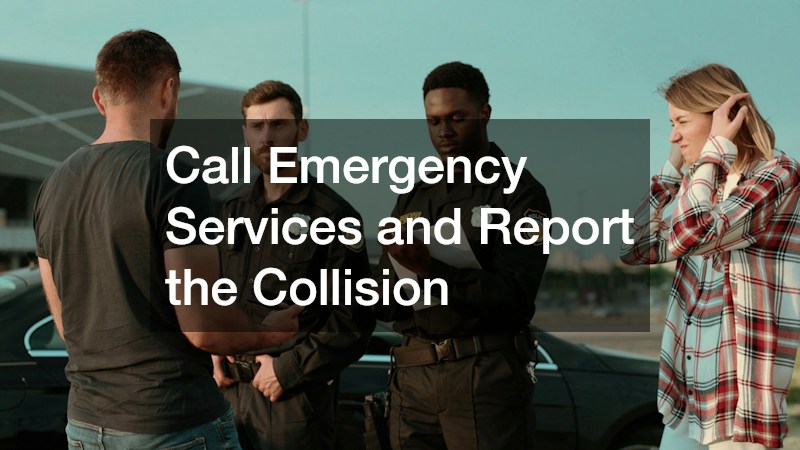
Even for a minor fender bender, calling 911 is usually the right move in a city environment, where traffic congestion and pedestrian activity raise the stakes of any accident. A dispatcher can send police to create an official report, which becomes an important record if there is any dispute later about who caused the crash. Clearly state your location, including cross streets or landmarks, since city blocks can be confusing for responders trying to find you quickly.
When police arrive, answer their questions honestly but keep your statements factual rather than speculative. Avoid guessing about fault or apologizing in a way that could be misread as admitting blame. Ask the responding officer how to obtain a copy of the official report once it is filed.
- Call 911 for any crash involving injury, major damage, or disputed fault
- Provide your exact location using street names or nearby businesses
- Request medical evaluation even if injuries seem minor at first
- Get the responding officer’s name and badge number for your records
Document the Scene Before Memories Fade
Once everyone is safe, start documenting the scene while details are still fresh and evidence is still visible. Use your phone to photograph vehicle damage from multiple angles, the overall crash scene, skid marks, traffic signals, and any visible injuries. City streets change fast, with tow trucks and traffic flow clearing debris within minutes, so acting quickly matters.
Write down or record a voice memo describing what happened while your memory is sharp, including the time, weather, and traffic conditions. Note any nearby security cameras on storefronts or traffic signals that might have captured footage, since businesses often erase recordings after a short window. This record can be invaluable if you later need to explain the sequence of events to an insurer or a car accident lawyer.
- Photograph all vehicles from several angles, including license plates
- Capture traffic signals, road signs, and any skid marks or debris
- Note the exact time, weather, and lighting conditions
- Look for nearby cameras on buildings, buses, or traffic poles
- Save a voice memo describing events while details are still clear
Exchange Information With the Other Driver
Approach the other driver calmly and exchange the basic details needed for insurance purposes. Keep the conversation brief and businesslike, since emotions can run high right after a collision. Stick to facts and avoid discussing who was at fault, as that determination often depends on evidence gathered later.
- Full name, phone number, and address of the other driver
- Insurance company name and policy number
- Driver’s license number and license plate
- Make, model, and year of the other vehicle
- Names and contact information for any witnesses nearby
Notify Your Insurance Company the Same Day
Most insurance policies require prompt notification after a crash, so contacting your insurer within the first hour or two helps keep your claim on track. Give a simple, factual summary of what happened without speculating about fault or downplaying your own injuries. Ask what documentation they need and how soon an adjuster might contact you or inspect the vehicle.
If the crash involved significant damage, injuries, or a dispute about fault, take extra care before agreeing to give a recorded statement, since early accounts are often used to settle claims quickly and may not reflect the full extent of damage or injury once everything is assessed. Stick to the facts you’re certain of, note what you don’t yet know, and ask for clarification on anything confusing in the process. This step is especially important in city crashes, where multiple vehicles, pedestrians, or ride-share drivers can complicate liability.
- Report the crash to your insurer the same day if possible
- Keep your account factual and avoid admitting fault
- Ask about rental car coverage if your vehicle is undrivable
- Request a timeline for claim review and vehicle inspection
Arrange Towing and Plan Your Next Steps
If your car cannot be driven safely, arrange a tow through your insurance roadside assistance or a local towing service rather than leaving it blocking traffic. Many city tow companies can arrive faster than you expect, especially near busy intersections where police want the road cleared quickly. Confirm where the vehicle will be taken so you can retrieve personal belongings later.
Before leaving the scene, double check that you have exchanged all necessary information and taken enough photos, since returning to a city crash site later is rarely practical. Arrange a ride home or to urgent care if needed, and consider following up with a doctor in the next day or two even if you feel fine. Delayed pain from whiplash or soft tissue injury is common after car accidents.
- Use insurance roadside assistance or a trusted local tow company
- Confirm the storage location and retrieval process for your vehicle
- Arrange alternate transportation before leaving the scene
- Schedule a medical check-up within a day or two, even without obvious injury
The first hour after a city car crash sets the tone for everything that follows, from your physical recovery to how smoothly your insurance claim moves forward. By staying calm, documenting thoroughly, and knowing when to seek professional guidance, you put yourself in the strongest possible position. Keep this checklist saved on your phone or printed in your glovebox so you are never caught without a plan.