
If it feels like every city courthouse has a line out the door for traffic court, you are not imagining things. Dockets across the country are swelling with speeding tickets, red light camera disputes, and parking violations that never get resolved quickly. For anyone who has ever sat in a waiting room for hours only to have their case pushed to another date, this backlog is more than an inconvenience, it can affect your license, your insurance rates, and your wallet. Understanding why this is happening can help you make smarter choices about how you handle your own citation.
Rising Volume of Citations Issued Each Year
Cities have expanded their use of automated enforcement tools, and that alone has dramatically increased the number of tickets entering the system. Red light cameras and speed cameras issue citations around the clock without needing an officer present, which means volume no longer depends on staffing levels. As more municipalities adopt this technology to generate revenue and improve road safety, the sheer quantity of paperwork flowing into courts has outpaced the system’s ability to process it efficiently.
On top of automated enforcement, police departments in many cities have renewed traffic enforcement campaigns following years of reduced patrols during public health restrictions. This rebound in enforcement has created a surge that older court systems were not built to absorb.
- Automated camera citations now account for a significant share of tickets in many major cities
- Enforcement campaigns targeting speeding and distracted driving have resumed at pre-pandemic levels
- Some cities have added new categories of camera enforcement, like school zone and bus lane cameras
- Population growth in urban areas has naturally increased the number of daily commuters at risk of citations
Outdated Technology Inside Court Systems
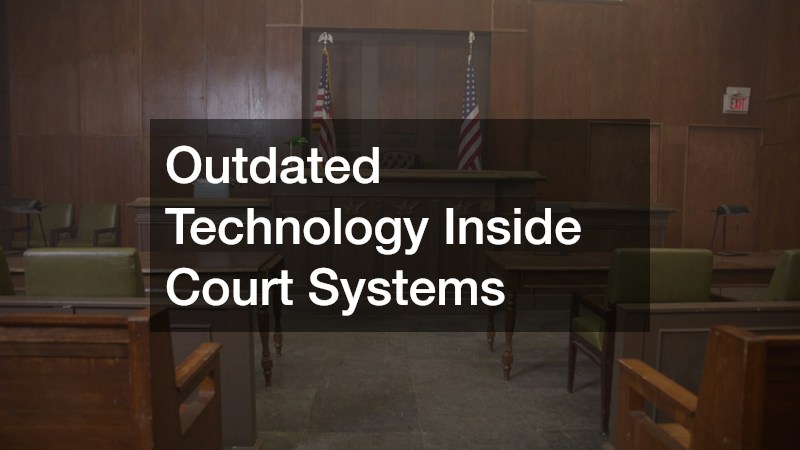
Many city courts still rely on paper filing systems or decades old software that cannot handle a high volume of cases efficiently. When a clerk has to manually enter data from a citation instead of relying on digital integration with police databases, every step takes longer and errors become more common. These inefficiencies ripple outward, delaying hearing dates and creating backlogs that can stretch for months.
Upgrading court infrastructure requires funding that many municipal budgets simply do not prioritize. Without investment in modern case management systems, clerks and judges are left trying to manage rising caseloads with tools that were designed for a much smaller docket.
- Paper based filing slows down scheduling and record retrieval
- Lack of integration between police databases and court systems causes duplicate work
- Limited online payment or dispute options push more people into in person appearances
- Software outages or technical glitches can delay entire dockets for days
Staffing Shortages Among Judges and Clerks
Even the best technology cannot fix a courtroom that does not have enough judges to hear cases. Many city courts are operating with fewer judges than they did a decade ago, while the number of cases has only grown. Clerks responsible for scheduling, filing, and communicating with defendants are similarly stretched thin, which leads to longer wait times for even simple matters like rescheduling a court date.
Hiring freezes and budget cuts in local government often hit court staff first, since traffic courts are seen as lower priority than criminal courts. This means the people trying to keep the system moving are often doing the work of two or three positions, which inevitably slows everything down for the people waiting on a resolution.
More Drivers Choosing to Fight Their Tickets
A growing number of people are deciding not to simply pay a ticket and move on, largely because the financial stakes have increased. Higher fines, steeper insurance surcharges, and the risk of license points have made drivers more willing to contest citations in court rather than accept them quietly. Each contested ticket requires a hearing, which takes far more court time than a simple payment would.
This shift has also been fueled by greater public awareness of legal options. Many drivers now consult traffic violation lawyers before deciding how to respond to a citation, since an experienced professional can often identify errors in how a ticket was issued or negotiate a reduced charge. This added layer of legal review, while helpful for individual drivers, adds another step to an already overloaded court calendar.
- Contested tickets require scheduling, evidence review, and sometimes multiple hearings
- Insurance rate increases have made drivers more motivated to fight citations
- Online research has made people more aware of their right to dispute a ticket
- Legal consultations can delay a case while documentation is gathered
Confusing Court Procedures and Scheduling Conflicts
For many people receiving their first citation, the process of understanding deadlines, required forms, and courtroom etiquette is overwhelming. Court notices often list a response window of just 10 to 30 days, and the paperwork can include multiple options—pay the fine, request a hearing, or enroll in traffic school—each with its own form and submission rules. Missing even one of these steps can trigger a default judgment or an automatic license flag, neither of which the defendant may realize has happened until much later. A missed deadline or an incorrectly filed form can result in a case being delayed or even dismissed and refiled, adding more clutter to an already busy docket. Clerks must then process the resubmission, judges must reschedule hearing slots, and the original case file has to be reopened and cross-checked for accuracy. In courts already handling hundreds of citations per week, these small administrative errors compound quickly, pushing legitimate hearings further back on the calendar. This confusion is especially common among non-native speakers or first-time offenders who are unfamiliar with local court rules. Some jurisdictions offer limited interpreter services or translated forms, leaving defendants to guess at legal terminology like “contest,” “arraignment,” or “continuance.” Without clear guidance, many simply miss their court date altogether, resulting in a bench warrant or a suspended license that turns a minor infraction into a far more complicated legal matter.
Scheduling conflicts compound the problem further. Courts often double book hearing times anticipating no shows, but when more people than expected appear, dockets run long and spill into additional days. A single morning calendar might list 80 to 100 cases, even though the courtroom can realistically handle only half that number before lunch. This creates a chain reaction that pushes other scheduled cases further back. A traffic case bumped from Tuesday might not get reassigned until a slot opens three or four weeks later, since judges, prosecutors, and courtroom staff all have overlapping calendars that need to align. Add in the extra time needed for interpreters, public defender consultations, or last-minute plea negotiations, and a single hearing can eat up a disproportionate share of the day. Clerks then have to manually reshuffle the remaining docket, which is slow, error-prone work when done case by case. The result is a backlog that grows not because people are avoiding court, but because the system itself cannot process everyone it summons within the time it allots.
- Unclear instructions on citation paperwork lead to filing mistakes, such as wrong court dates or missing signature lines, forcing clerks to manually correct errors
- Limited multilingual support can slow down communication with defendants, leaving non-English speakers unsure of deadlines or how to contest a ticket
- Overbooking of hearing slots assumes a no-show rate that does not always hold true, causing packed dockets when more defendants appear than courts planned for
- Rescheduled cases often get pushed weeks or months later due to limited court dates, compounding backlogs as new citations keep arriving faster than old ones clear
- Conflicting instructions between online portals, mailed notices, and courthouse signage add to defendant confusion about where and when to appear
- Short staffing at clerk windows lengthens wait times for simple questions, pushing more people toward costly mistakes or missed deadlines
The backlog in city traffic courts is the result of several overlapping problems, from outdated technology to staffing shortages and a growing willingness among drivers to contest their citations. While you cannot single handedly fix a broken court system, you can take steps to protect yourself by understanding your citation, meeting every deadline, and seeking professional guidance if your case feels complicated. Taking action early rather than waiting until a court date approaches can save you time, stress, and money in the long run.