

In the world of modern athletics, the paradigm has shifted. For decades, the prevailing wisdom was defined by grit, the grind, and the philosophy that more is always better. Athletes wore fatigue like a badge of honor, pushing their bodies to the absolute limit day in and day out. While hard work remains non-negotiable, the edge in today’s competitive landscape isn’t found solely in how hard you can train; it is found in how efficiently you can recover.
The most successful athletes—from weekend warriors to Olympians—are realizing that training provides the stimulus, but recovery is when the actual growth occurs. If you spend 90% of your energy on exertion and only 10% on restoration, you are destined for performance plateaus, chronic fatigue, and eventual injury. True performance optimization requires a shift toward a holistic model of care. It is no longer enough to simply stretch for five minutes after a run. You must adopt a 360-degree approach that addresses blood chemistry, biomechanics, soft tissue health, and psychological resilience.
This guide explores the essential components of a comprehensive recovery strategy. We will move beyond basic rest and ice to discuss advanced nutrient absorption, the correction of structural imbalances, the critical role of professional manual therapy, and the often-overlooked power of the mind. By integrating these holistic practices, you can build a body that is not only stronger and faster but also more resilient and capable of sustaining high performance for the long haul.

Optimize Your Nutrient Absorption for Cellular Repair
To perform at a high level, you must view your body as a high-performance engine. Just as you wouldn’t put low-grade fuel into a Formula One car, you cannot expect your body to repair complex tissue damage without the precise building blocks required for the job. However, the challenge for many athletes is not just what they consume, but what they actually absorb. Digestion is an energy-intensive process, and during periods of high physical stress, the gut’s ability to break down and utilize nutrients can be compromised. This is where understanding bioavailability becomes a game-changer for recovery.
The Science of Advanced Hydration and Delivery
This is why many endurance athletes and weightlifters have begun incorporating IV therapy for muscle recovery into their routines. By delivering a saline solution enriched with magnesium, zinc, Vitamin C, and amino acids directly into the bloodstream, the body achieves 100% bioavailability. This rapid influx of fluids and nutrients helps to immediately rehydrate tissues at the cellular level, reduce inflammation more quickly than oral supplements, and significantly shorten the downtime between intense sessions. It transforms hydration from a passive maintenance task into an active recovery strategy.
Micronutrients and Energy Maintenance
For athletes who feel sluggish despite adequate sleep and caloric intake, the issue may be a deficiency in these specific micronutrients. Many active individuals utilize B12 injections to ensure their levels remain optimal. Unlike oral pills, which can be difficult to absorb—especially for those with dietary restrictions or specific genetic variations—an injection ensures the vitamin is available for immediate use by the body. Adequate levels of B12 support nerve health, improve reaction time, and combat the deep, systemic fatigue that often plagues athletes during peak training blocks.
- Monitor Urine Color: It should be a pale straw color. Clear implies over-hydration; dark implies dehydration.
- Assess Post-Meal Energy: If you feel sluggish immediately after eating, your digestive efficiency may be low, impairing nutrient uptake.
- Track Recovery Time: If soreness lingers for 3-4 days post-workout, your cellular repair materials (nutrients) may not be reaching the target tissues effectively.

Address Biomechanical Imbalances Before They Cause Injury
The human body is a kinetic chain, meaning movement in one area affects the stability and function of another. A tightness in the ankle can lead to knee pain; a weakness in the hip can cause lower back spasms. Too often, athletes treat the site of the pain rather than the source of the problem. To boost performance and prevent season-ending injuries, you must proactively identify and correct biomechanical imbalances before they manifest as acute pain.
The Foundation: Feet and Ankles
Every time your foot strikes the ground while running or jumping, it absorbs forces equivalent to several times your body weight. If your foot structure is compromised—whether due to fallen arches, over-pronation, or rigid high arches—that force is not dissipated correctly. Instead, it travels up the leg, creating micro-trauma in the shins, knees, and hips.
Athletes should stop guessing about their stride and seek objective data. Visiting a specialized foot clinic allows for a comprehensive gait analysis. Using pressure mapping and video analysis, specialists can see exactly how your foot interacts with the ground. This insight determines whether you need specific strengthening exercises for the intrinsic muscles of the foot, a change in footwear, or custom orthotics. Correcting these foundational issues improves power transfer; when your foot strikes the ground efficiently, more energy is directed into propelling you forward rather than stabilizing a collapsing arch.
Joint Health and Structural Integrity
While muscle tissue regenerates relatively quickly, connective tissues—tendons, ligaments, and cartilage—have a much slower metabolic rate. They are often the first to fail under heavy loads. “Soreness” is a natural part of training, but sharp, structural pain is a warning signal that something is mechanically wrong.
Establishing a relationship with a local orthopedic clinic is a smart preventative measure for any serious athlete. You do not need to wait for a bone break or a tear to see a specialist. An orthopedic evaluation can assess range of motion, joint stability, and cartilage health to establish a baseline. If you have a history of “clicking” shoulders or “catchy” knees, an orthopedist can help determine if these are benign mechanical quirks or signs of early degeneration. By addressing these structural red flags early—perhaps through bracing or load management—you can extend your athletic career by years.
The “Shoe Wear” Test
- You can perform a basic self-assessment by looking at your old running shoes.
- Neutral Wear: Even wear across the ball of the foot and a small amount on the outer heel. This is ideal.
- Medial Wear (Inside): Excessive wear on the inner edge of the shoe suggests over-pronation. You may be at risk for shin splints or runner’s knee.
- Lateral Wear (Outside): Excessive wear on the outer edge suggests supination. This creates high shock loads, increasing the risk of stress fractures.
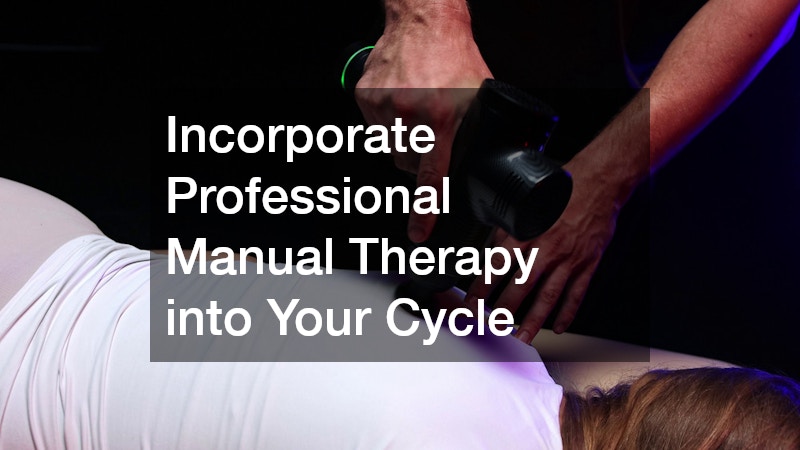
Incorporate Professional Manual Therapy into Your Cycle
There is a distinct difference between passive rest—lying on the couch—and active maintenance. While sleep is crucial, it does not break up scar tissue or mobilize stiff joints. As training volume increases, your muscles can develop adhesions: sticky spots where muscle fibers and fascia (the connective tissue wrapping the muscles) become glued together. These adhesions restrict range of motion and reduce the muscle’s ability to contract forcefully. To maintain peak output, you must incorporate professional manual therapy into your training cycle.
Soft Tissue Mobilization and “Pre-Hab”
Many athletes view therapy as something you do only after you get hurt. However, the most effective use of therapy is “pre-hab”—preventative maintenance designed to keep tissues pliable and responsive. When muscles are chronically tight, they pull on tendons, creating tension that eventually leads to tendonitis.
Working regularly with physical therapists allows you to address these tension patterns before they become injuries. Therapists utilize techniques such as myofascial release, trigger point dry needling, and instrument-assisted soft tissue mobilization (IASTM) to break down adhesions that a foam roller simply cannot reach. This restores proper blood flow to the tissue and ensures that the muscle fibers slide and glide against each other smoothly. A muscle that is pliable absorbs shock better and generates more explosive power than a muscle that is stiff and fibrotic.
Corrective Exercise Programming
Beyond hands-on work, professional guidance is essential for identifying muscular asymmetries. It is common for athletes to be dominant on one side or to have certain muscle groups that are overactive while opposing groups are dormant (e.g., strong quadriceps but weak glutes). These imbalances alter movement mechanics and decrease efficiency.
Physical therapy provides a controlled environment to identify and correct these issues. A therapist can prescribe a corrective exercise program that targets your specific weak links. This might involve isolation exercises to “wake up” the glute medius to prevent knee valgus (cave-in) or specific core work to stabilize the lumbar spine during heavy lifting. By normalizing muscle recruitment patterns, you ensure that every movement is biomechanically efficient. This not only prevents injury but also improves performance, as your body is no longer wasting energy fighting against its own imbalances.
- Deep Tissue/Intensive Work: Schedule this 3-4 days before a major competition or heavy training session. This gives your body time to flush out inflammation and recover from the therapy itself.
- Flush/Light Work: Schedule this the day after a competition. The goal here is simply to move lymphatic fluid and promote blood flow, not to break down tissue.
- Corrective Exercises: These should be done daily or as part of your warm-up routine to constantly reinforce proper movement patterns.

Fortify Your Psychological Resilience for Peak Performance
The brain is the governor of the body. It controls muscle recruitment, hormone regulation, and the perception of fatigue. You can have the most physically conditioned body in the world, but if your central nervous system is overwhelmed by stress, your performance will suffer. Holistic recovery acknowledges that the mind and body are inextricably linked. Stress is systemic; the body does not differentiate between the stress of a heavy squat session and the stress of a difficult week at work. Both tax the recovery reserves.
The Stress-Injury Connection
When an athlete is under high cognitive or emotional load, their injury risk increases effectively. High levels of cortisol, the body’s primary stress hormone, are catabolic—they break down muscle tissue and inhibit the immune system. If you are training hard while simultaneously battling anxiety or high life stress, you are burning the candle at both ends.
Prioritizing mental health is a legitimate performance strategy. Techniques such as visualization, mindfulness meditation, and breathwork are not “soft” sciences; they are physiological regulators. They help switch the autonomic nervous system from a sympathetic state (fight or flight) to a parasympathetic state (rest and digest). It is only in the parasympathetic state that the body can repair tissue and replenish energy stores. If you are constantly in a state of high alert, your recovery is chemically blocked.
Recognizing Burnout and Overtraining
There is a fine line between reaching peak performance and falling into Overtraining Syndrome (OTS). OTS is a serious condition where the body’s neuroendocrine system becomes maladapted to the stress of training. The symptoms are often more psychological than physical in the early stages.
Athletes suffering from overtraining often experience mood disorders, such as sudden irritability, apathy toward training, insomnia, or heightened anxiety. These are not signs of mental weakness; they are biological red flags that the nervous system is exhausted. Ignoring these signs can lead to long-term burnout that takes months to correct. Recognizing that emotional instability is a symptom of physical overload is crucial. By monitoring your mood as closely as your lift numbers or run times, you can adjust your training volume before you crash.
- The 10-Minute Decompression: Immediately post-workout, spend 10 minutes doing box breathing (inhale 4s, hold 4s, exhale 4s, hold 4s). This kickstarts the parasympathetic nervous system.
- Sleep Hygiene: Treat sleep as your most important training session. Sleep is when the brain processes motor learning, and hormones are regulated.
- Cognitive Off-Loading: Find a hobby that has nothing to do with your sport. Engaging your brain in a different way allows the neural pathways associated with your sport to rest and reset.

Structure Your Comeback with Specialized Guidance
No matter how well you prepare, setbacks happen. Whether it is a sprained ankle, a torn muscle, or simply a flare-up of chronic pain, how you manage the rehabilitation process dictates how quickly you return to the field. Many athletes make the mistake of trying to self-manage injuries, often returning to sport too soon or modifying their movement to avoid pain, which only creates new issues. Structuring a comeback requires a professional roadmap.
Navigating Setbacks and Finding the Right Facility
When an injury occurs, the goal is to bridge the gap between “injured” and “performance ready.” This requires more than just resting until the pain stops. You need a facility that understands the demands of your specific sport. A runner needs a different rehab protocol than a powerlifter.
When searching for a provider, look for a local rehabilitation therapy center that offers sport-specific modalities. Does the facility have space for agility drills? Do they use advanced technologies like blood flow restriction training or cryotherapy? The environment should feel like a training center, not a hospital room. The right environment keeps you mentally engaged in your sport while you physically repair the damage.
The Return-to-Sport Protocol
The most dangerous time for an athlete is the first week back after an injury. The pain may be gone, but the tissue may not yet have the tensile strength to handle maximum loads. Furthermore, proprioception (the body’s awareness of itself in space) is often diminished after time off.
This is why you must utilize a professional rehabilitation therapy service to guide your return. These services utilize objective criteria—such as force plate testing to measure power output between limbs, or dynamometers to measure specific muscle strength—to clear you for play. This data-driven approach removes the guesswork. Instead of saying “I feel okay,” you have data proving that your injured leg is within 10% of the strength of your non-injured leg. This structured progression ensures that when you step back into the arena, you are not just healed but fully prepared for the intensity of competition.
- Green Light (0-3/10 pain): Discomfort is acceptable. You can train, but monitor it. Pain should return to baseline within 24 hours.
- Yellow Light (4-5/10 pain): Caution. Modify the movement, reduce the weight, or shorten the duration. If pain persists, stop.
- Red Light (6+/10 pain): Stop immediately. This level of pain alters movement mechanics and indicates active tissue damage.
Conclusion
Athletic performance is a complex puzzle, and physical training is only one piece. To truly unlock your potential and sustain it over a lifetime, you must broaden your scope to include the biology of recovery, the mechanics of movement, and the resilience of the mind. The days of simply “toughening it out” are over; the new era of athletics belongs to the smart, the balanced, and the recovered.
By optimizing your nutrient absorption, ensuring your skeletal structure is sound, maintaining tissue quality through manual therapy, and respecting the connection between stress and performance, you build a foundation that is difficult to break. Recovery is an active, intentional process. It requires investment, time, and a team of trusted professionals.